
The Best Black Paint Colors for Doors, Trim & Walls (2026)
Explore colors in this guide
Open a color for its details and cross-brand alternatives. Read on for the context behind each choice.
The best black paint color for most projects is Tricorn Black(Sherwin-Williams) (SW 6258, LRV 2.9) — a clean, near-neutral true black that designers reach for on front doors, interior trim, and cabinets because it stays black without drifting blue, brown, or green. But “black” isn't one color. There's true black, soft or charcoal-black, and blue-black, and the right pick depends on where it's going and how much light the room gets. This guide sorts ten well-known blacks by exactly that, and every LRV and cross-brand match below comes straight from our database.
First, Understand LRV: Why a Black Isn't Just Black
Light Reflectance Value (LRV) runs from 0 (pure black) to 100 (pure white), and for blacks the useful range is roughly 3 to 8. True blacks sit near LRV 3 — they absorb almost all light and read as absolute black. Soft or charcoal-blacks land between LRV 5 and 8: still unmistakably dark, but they show a hint of depth and dimension in daylight instead of flattening into a void. Above LRV 10, a color starts reading as dark gray rather than black. The lower the LRV, the more light the color swallows — which is why a true black feels dramatic on a small front door but can make a whole room feel smaller. If undertones are new to you, our guide to understanding paint color undertones explains how even a near-neutral black can lean warm or cool.
The Best True Blacks (LRV ~3)
Tricorn Black(Sherwin-Williams) (SW 6258, LRV 2.9) is the benchmark true black — neutral, crisp, and the safest choice when you want black to actually look black. Its closest match is Black(Benjamin Moore) (HC-190, LRV 3.2), a near-identical twin, so the two are interchangeable across the Sherwin-Williams / Benjamin Moore divide. Both pair beautifully with Dutch Boy True Black, a dead-on hex match for big-box shoppers.
Caviar(Sherwin-Williams) (SW 6990, LRV 3) is Sherwin-Williams' other true black — a hair warmer than Tricorn Black and a near-identical match for Benjamin Moore Black (HC-190). Use Caviar when you want the faintest warmth so the black doesn't feel clinical. All three of these read as absolute black on a front door or cabinet; on a full wall they create the deepest, most enveloping effect.
The Best Soft & Warm Blacks (LRV 4–8)
Soft blacks are the designer's secret for walls and large surfaces — they carry the drama of black but show subtle dimension instead of going flat. Iron Ore(Sherwin-Williams) (SW 7069, LRV 5.6) is the most popular of the group: a warm charcoal-black that reads black indoors but softens to deep gray in bright light, which makes it far more forgiving on whole walls and exteriors. Its closest match is Behr Broadway (a near-identical match at Home Depot), with Benjamin Moore Notre Dame close behind.
Wrought Iron(Benjamin Moore) (BM 2124-10, LRV 7) is the soft black designers use instead of pure black when they want depth without harshness — it's the warmer, grayer cousin to Iron Ore. Behr Timber Brown is its closest match, with Farrow & Ball Liquorice nearly identical. Black Beauty(Benjamin Moore) (BM 2128-10, LRV 4) splits the difference — deeper than Wrought Iron but warmer than a true black, with a faint brown softness. Its closest match is Pitch Black(Farrow & Ball) (F&B 256, LRV 4.1), an almost-perfect twin — so if you love the Farrow & Ball name but want it tinted at a US store, Black Beauty gets you there.
For the lightest pick here, Cracked Pepper(Behr) (Behr PPU18-01, LRV 8.2) is technically the edge of black — almost a charcoal — which makes it the most livable on full walls in rooms that don't get much light. Its closest match is Benjamin Moore Cheating Heart, with Sherwin-Williams Peppercorn close behind.
The Best Blue-Black: Inkwell
Inkwell(Sherwin-Williams) (SW 6992, LRV 3.6) is the one black here with a deliberate cool cast — a near-black with a navy-blue undertone that reads almost black in low light and reveals its blue in daylight. It's the move when you want black's depth but a cooler, moodier feel, and it pairs especially well with brass and warm woods. Its closest match is Behr Spade Black, with Benjamin Moore After Midnight a close second. Compare it side-by-side with a true black like Tricorn Black in the color comparison tool to see the blue cast clearly before you commit.
Where to Use Black: Doors, Trim & Walls
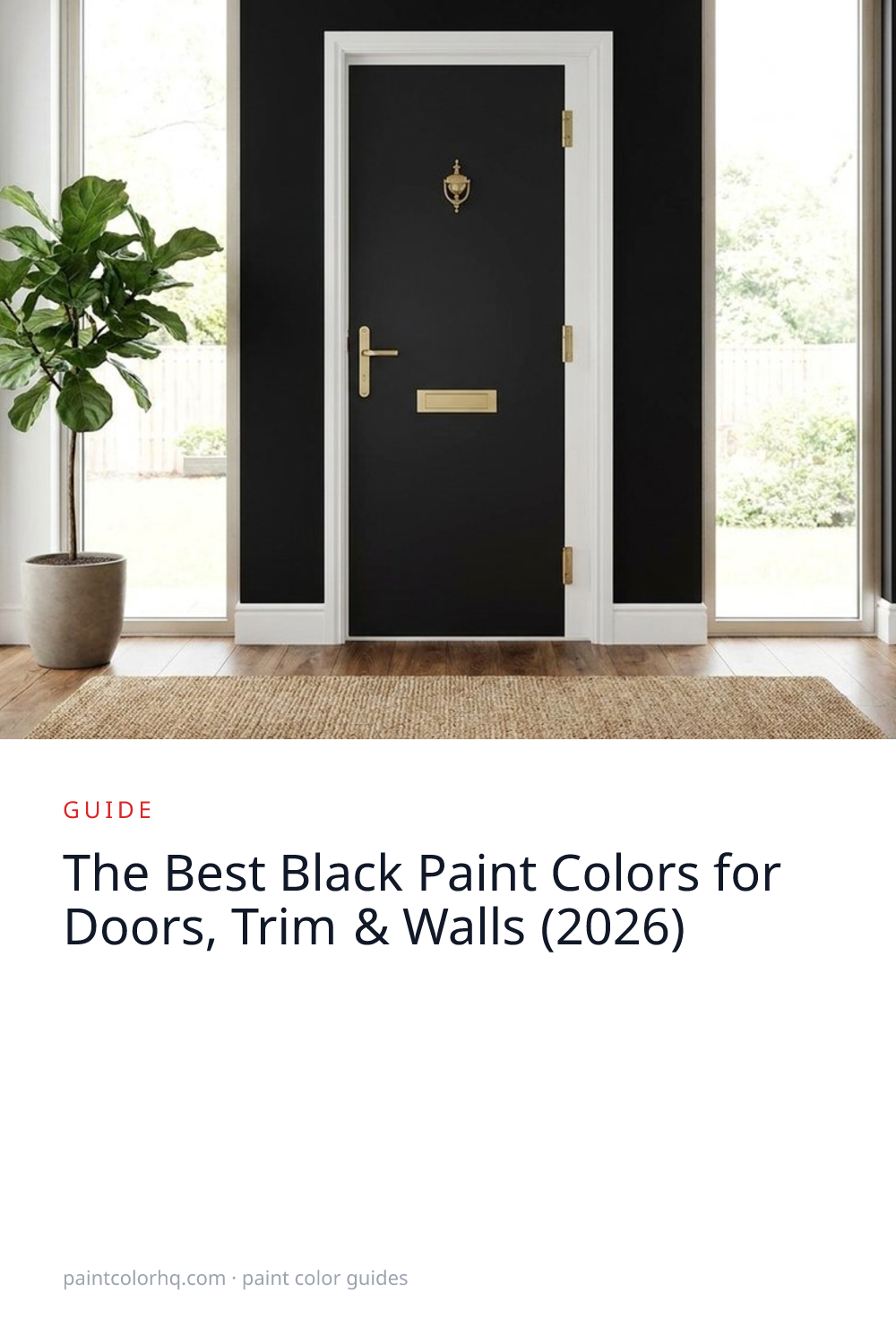
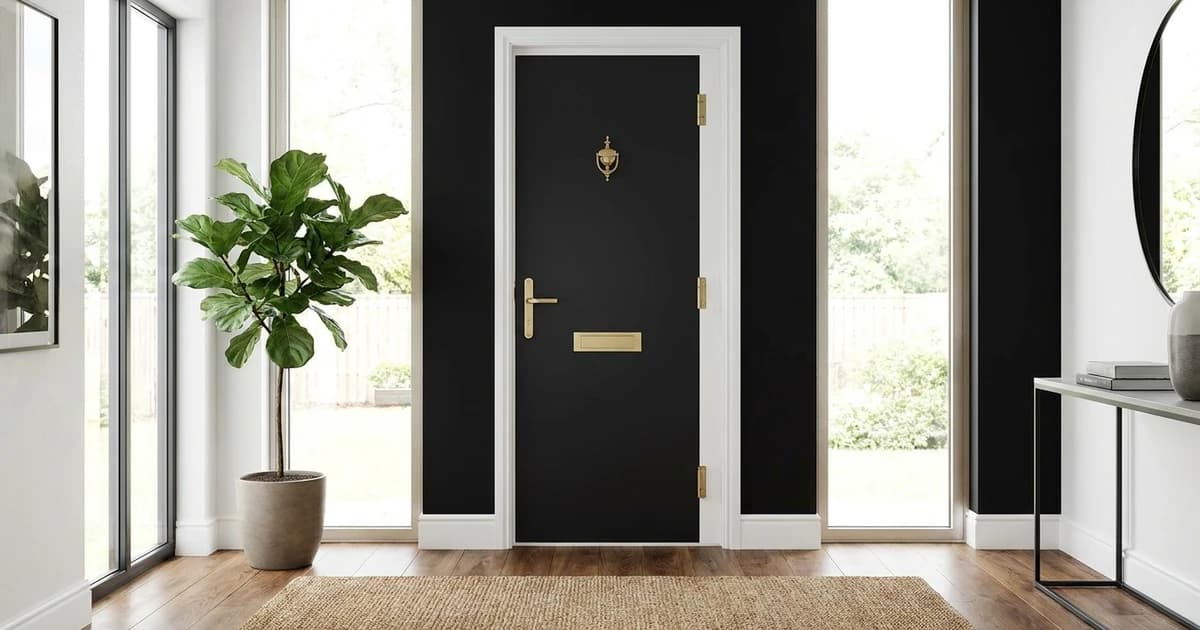
A front door is the lowest-risk place to go black — a true black like Tricorn Black or Caviar reads as crisp and timeless against almost any siding, and the small surface keeps it from overwhelming. On interior trim, doors, and cabinets, black adds high-contrast definition without taking over the room; a true black or a soft black both work, with Onyx(Benjamin Moore) (BM 2133-10, LRV 3.6) a popular cabinet pick. Whole walls are the bigger commitment: black absorbs light, so it shrinks a room and reads best as an accent wall or in a space you want to feel cocooning. Reach for a soft black (Iron Ore, Wrought Iron, Cracked Pepper) on full walls — the slightly higher LRV keeps the room from feeling like a cave. See the full range in our black paint colors and gray paint colors families, and preview any of them on a real room with the room visualizer.
Sheen Matters More with Black
Black exaggerates sheen, so the finish you pick changes the look as much as the color does. Matte or eggshell hides surface flaws and gives walls a deep, velvety black — the modern default. Satin or semi-gloss suits trim, doors, and cabinets, where the slight reflection reads as crisp and wipes clean. High gloss is dramatic on a front door but shows every brushstroke and dent, so it demands a smooth surface and a careful hand. Whatever the sheen, build a full scheme around your black in the palette generator so the trim, walls, and accents work together before you buy a gallon.
Getting the Look in the Brand You Buy
Every black above carries its closest equivalents across 13 other brands, scored by how similar they actually look — so if you love a Sherwin-Williams or Benjamin Moore black but shop somewhere else, you don't have to settle. Browse the full Sherwin-Williams color chart, see the side-by-side cross-brand list in the Sherwin-Williams to Benjamin Moore matches, or pin down whether your black leans warm or cool first with our guide to paint color undertones — the test that keeps a true black from drifting blue or brown on the wall.