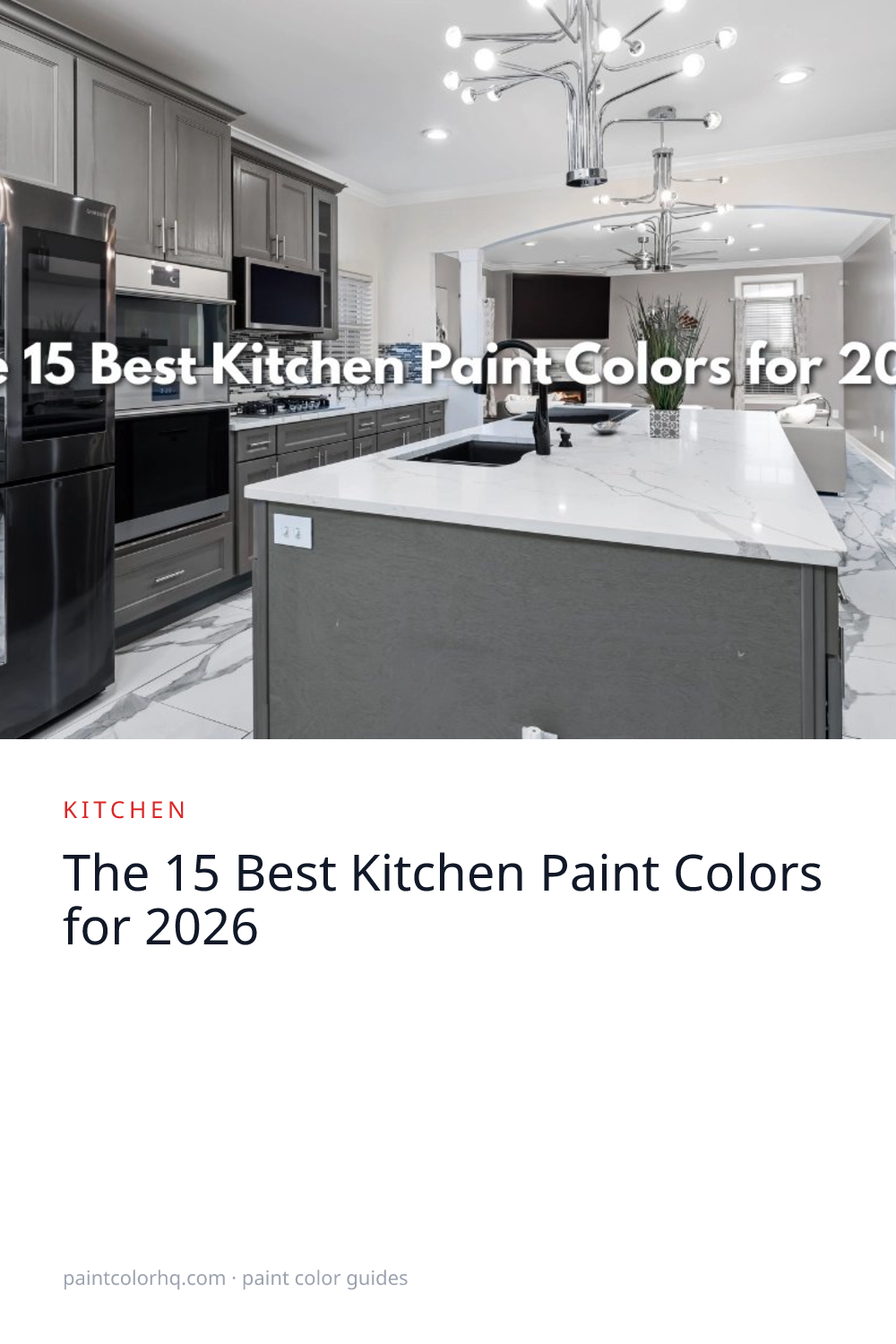
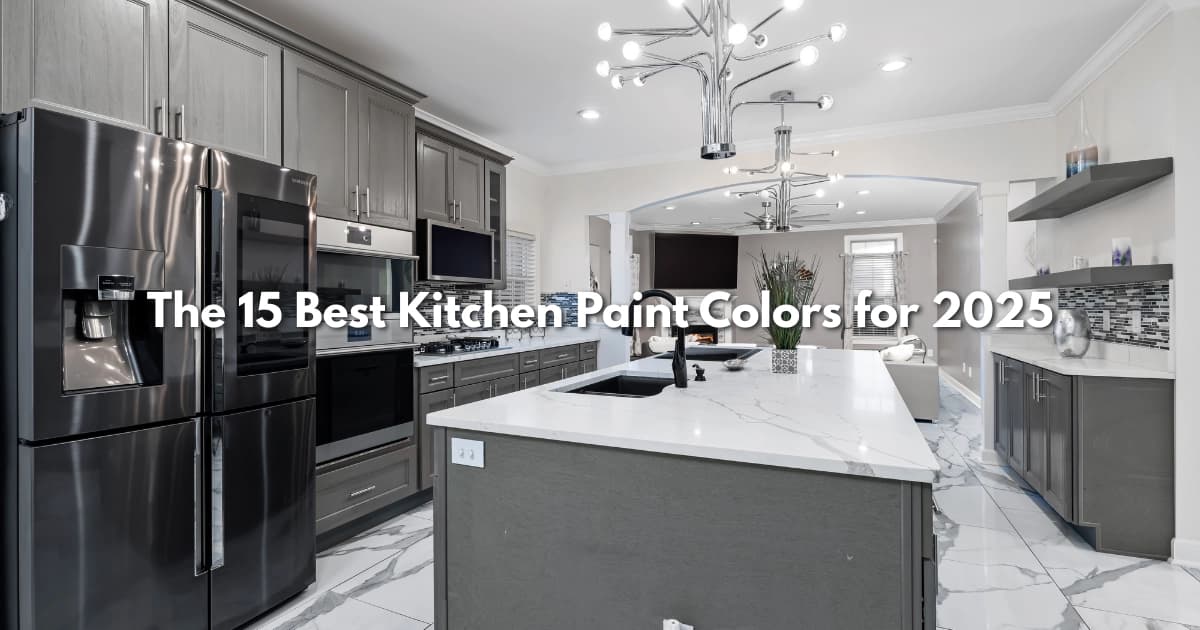
The 15 Best Kitchen Paint Colors for 2026
Explore colors in this guide
Open a color for its details and cross-brand alternatives. Read on for the context behind each choice.
The best kitchen paint color depends on three things most guides skip: your lighting direction, your countertop undertone, and whether you are painting cabinets, walls, or both. A color that looks perfect on a chip in a south-facing showroom will look completely different on your north-facing kitchen cabinets at 7 PM under LED task lighting. This guide covers 15 specific colors across five categories, with LRV values and finish recommendations for each.
Why Kitchen Paint Is Different
Kitchens put more demands on paint than any other room. Daily cooking generates grease, steam, and splatter that require a finish tough enough to wipe clean repeatedly without dulling or peeling. The rule: satin or semi-gloss finish only for kitchen cabinets and walls. Flat and eggshell absorb grease and cannot be scrubbed clean without removing the paint film.
For cabinet-grade durability, Benjamin Moore Advance and Sherwin-Williams Emerald Urethane Trim Enamel are the two best formulations available to consumers. Both self-level (reducing brush marks), cure to a hard finish, and hold color better than standard wall paint under repeated cleaning.
LRV (Light Reflectance Value, on a 0–100 scale) matters more in kitchens than almost any other room because task lighting creates harsh contrast. Colors below LRV 20 on full-height cabinets can make a kitchen feel closed-in unless the room has substantial natural light or high ceilings.
Crisp Whites (LRV 83–92)
White remains the most-specified kitchen color for one practical reason: it reflects task lighting back into the work area instead of absorbing it. The critical variable is undertone. Blue-white kitchens look clinical under warm incandescent or LED bulbs; yellow-white kitchens look dingy under cool daylight bulbs. The three whites below are chosen specifically because their undertones stay stable across bulb types.
Chantilly Lace OC-65(Benjamin Moore) — LRV 92. The cleanest true white in the Benjamin Moore line with virtually no undertone. It does not read yellow under warm bulbs or blue under cool ones, which is why it has become the go-to for modern kitchens with stainless appliances and quartz countertops. At LRV 92, it maximizes light reflection. Finish: semi-gloss for cabinets, satin for walls.
Pure White SW 7005(Sherwin-Williams) — LRV 84. A warm white with subtle cream undertones that pairs naturally with butcher block, brass hardware, and warm oak flooring. Where Chantilly Lace is crisp, Pure White is inviting. It is the most popular Sherwin-Williams cabinet color and holds up under both warm and cool lighting without shifting to yellow.
White Dove OC-17(Benjamin Moore) — LRV 86.2. Crosses into warm white territory with a soft cream-yellow undertone. Best for kitchens with warm-toned countertops (marble with warm veining, soapstone, butcher block) where you want the cabinetry to feel like part of a warm, cohesive palette rather than a stark contrast. Browse the full white color family.
Moody Greens (LRV 3–12) — The 2026 Trend
Green cabinetry went from trend to mainstream between 2023 and 2025, and in 2026 the direction has shifted from bright sage toward deeper, more complex greens with blue or gray undertones. These are not colors for timid renovations. At LRV 3–12, they absorb most of the light in the room and demand specific countertop pairings to avoid looking muddy. Done right, they are the most striking kitchen choice available.
Essex Green HC-188(Benjamin Moore) — LRV 3.4. Dark forest green that reads almost black in low light. Best used on lower cabinets paired with white or cream uppers, where the contrast creates a furniture-like look. Requires white or very light quartz countertops to keep the kitchen from reading too dark. Finish: semi-gloss in Benjamin Moore Advance to show off the depth.
Pewter Green SW 6208(Benjamin Moore) — LRV 11.8. The most versatile green on this list. Its gray undertone keeps it from reading as primary green, which makes it work on full-height cabinetry where Essex Green would be too intense. It holds its color under both warm and cool lighting. Pairs with quartz, marble, and even warm laminate countertops without looking jarring.
Tarrytown Green HC-134(Benjamin Moore) — LRV 8.8. A mid-tone blue-green that sits between Essex Green and Pewter Green in both depth and mood. Its blue undertone gives it a cooler, more modern feel than purely warm greens. Works best in kitchens with cool-toned countertops (white quartz, gray marble, concrete). Browse the full green color family.
Warm Neutrals (LRV 51–66)
The cool gray kitchen dominated the 2010s. In 2026, warm neutrals, greiges, and mushroom tones have replaced it for homeowners who want a timeless kitchen without going all-white or all-bold. At LRV 51–66, these colors reflect enough light to stay bright while adding warmth that cool grays never could.
Edgecomb Gray HC-173(Benjamin Moore) — LRV 66. The most-specified warm greige for transitional kitchens. It reads as neither beige nor gray, which makes it flexible with a wide range of countertop materials. Works with both warm and cool hardware finishes. Its LRV is high enough to stay bright in north-facing kitchens without looking washed out in south-facing ones.
Accessible Beige SW 7036(Sherwin-Williams) — LRV 58. Leans warmer than Edgecomb Gray, with more yellow-tan in its undertone. This makes it a natural match for kitchens with oak or honey-toned wood flooring, where a cooler neutral would clash with the wood's warmth. On countertops with strong warm veining (travertine, warm quartzite), it integrates seamlessly.
Shiitake SW 9173(Sherwin-Williams) — LRV 51.2. A deeper mushroom-taupe that is the most current of the three warm neutrals listed here. At LRV 51, it is dark enough to feel intentional while still maintaining readability in natural light. Best paired with natural stone countertops and unlacquered brass hardware for a fully organic, 2026-forward kitchen aesthetic.
Bold Darks (LRV 4–41)
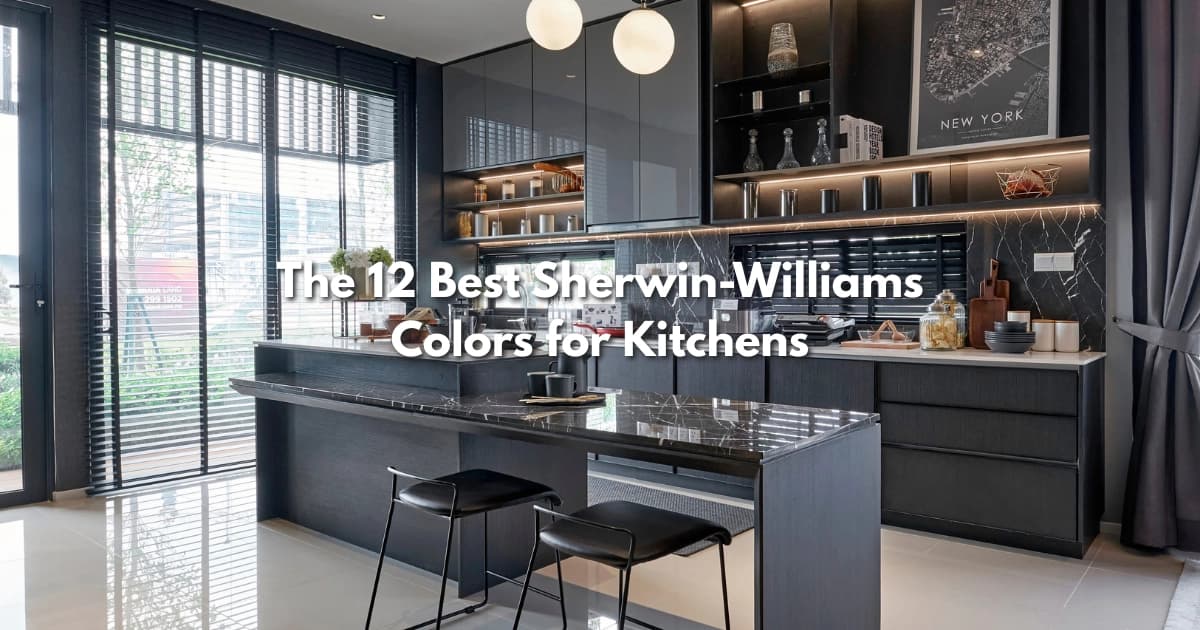
Dark cabinetry has moved from accent islands to full kitchens in high-end renovations. At LRV 4–8, these colors need strong light sources to prevent the kitchen from feeling like a cave. They work best in kitchens with large windows, skylights, or generous overhead lighting, and they require light-colored countertops and backsplashes as counterbalance.
Naval SW 6244(Sherwin-Williams) — LRV 4.5. A deep, complex navy with blue-black depth. At LRV 4.5, it is very dark. The classic application is a navy island with white perimeter cabinets and white quartz countertops, creating a high-contrast look that photographs extremely well. Aged brass or unlacquered brass hardware at the same warmth level.
Wrought Iron 2124-10(Benjamin Moore) — LRV 7. Not pure black. Wrought Iron has warm charcoal undertones that read as very deep gray in natural light, which is what separates it from flat-black competitors. In full kitchens, it requires white or very light countertops and a light backsplash to stay functional. On islands, it pairs with nearly any countertop material.
Universal Khaki SW 6150(Sherwin-Williams) — LRV 40.6. The Sherwin-Williams 2026 Color of the Year, and the best mid-tone alternative for kitchens that want warmth without going dark. At LRV 40.6, it sits in the moderate range — not bright enough to read as a neutral, not deep enough to need the light requirements of Navy or Wrought Iron. Its warm sandy-brown tone pairs with butcher block, warm marble, and black or aged brass hardware. See the full 2026 Colors of the Year comparison.
Soft Blues (LRV 44–58)
Blue kitchen walls offer a fresh alternative to all-white kitchens at a moderate LRV that maintains brightness while adding clear color identity. These blues are all desaturated enough to read as sophisticated rather than playful, and their gray undertones prevent them from looking juvenile in adult spaces.
Boothbay Gray HC-165(Benjamin Moore) — LRV 44.1. A blue-gray that sits exactly at the intersection of blue and gray. It reads as blue in warm afternoon light and as gray in cool morning light. This shifting quality works well in kitchens open to living areas where you want a color that feels different at different times of day without being dramatic. White trim makes it pop; warm wood tones ground it.
Sleepy Blue SW 6225(Sherwin-Williams) — LRV 57.9. A powder blue with enough gray to stay calm rather than chipper. On walls in an open-plan kitchen, it creates a palette that works with stainless, white, and natural wood without requiring any of them specifically. See more options in the blue color family.
How to Test Before Committing
Kitchen lighting is the hardest lighting condition to predict from a chip. Most kitchens have overhead task lighting that creates bright spots and shadows simultaneously. Before buying a full gallon, test with large peel-and-stick samples from Benjamin Moore or Sherwin-Williams (roughly $5–8 each, approximately 8 x 8 inches). Place samples next to your countertops and hardware, and observe them at three specific times: morning natural light, midday overhead light, and evening with your kitchen lights on at full intensity.
For cabinet colors specifically: paint a sample board the same size as one cabinet door and lean it against the actual cabinet for 48 hours before making a final decision. The color on a flat surface at eye level reads differently than on a recessed panel at varying heights and angles.
Use our room visualizer to preview any of these colors in a kitchen setting, and our paint calculator to estimate how much paint your project will need. For help understanding warm versus cool undertones, read our guide to paint color undertones, or see how lighting direction affects color in our north-facing rooms guide.