
15 Best Bathroom Paint Colors That Handle Humidity (2026)
Explore colors in this guide
Open a color for its details and cross-brand alternatives. Read on for the context behind each choice.
Choosing the best bathroom paint colors means balancing two things: a shade you love and a formulation that survives daily steam, splashes, and humidity swings. Get it wrong and you end up with peeling, mildew, or a color that looked great on the swatch but washes out under vanity lighting.
Below you'll find 15 designer-approved bathroom paint colors for 2026 — organized by mood — plus the finish, formulation, and lighting advice that keeps them looking fresh for years. Every color links to its full profile so you can preview it in our room visualizer before buying a sample.
Why Bathroom Paint Is Different
Before choosing a color, understand what makes bathroom paint unique. Bathrooms generate more humidity per square foot than any other room. That moisture saturates drywall, breeds mildew, and causes cheaper paints to blister within months.
Finish matters as much as color. Use a satin or semi-gloss finish — both repel moisture and wipe clean easily. Flat and eggshell finishes absorb water and trap mildew spores. Semi-gloss is the best choice for shower surrounds and ceilings directly above tubs.
Choose mildew-resistant formulas. Premium bathroom-specific lines — Benjamin Moore Aura Bath & Spa, Sherwin-Williams Emerald, Behr Ultra Scuff Defense, and PPG Diamond — include antimicrobial additives that inhibit mold growth on the paint film itself.
Primer is non-negotiable. If your walls have any existing mildew stains, apply a mold-killing primer before topcoating. Painting over mildew traps spores under the surface and they will push through within weeks. Read our paint sheen guide for a deep dive on finishes.
Spa-Inspired Blues
Blue is the most natural bathroom color — it evokes water, sky, and calm. The key is choosing muted, slightly grayed-out blues that feel sophisticated rather than childish. These work in any bathroom size and pair well with white tile, marble, and chrome fixtures.
Aegean Teal(Benjamin Moore) — a blue-green-gray that feels coastal and serene without being literal. One of the most versatile bathroom blues ever created. Pair with white subway tile and brushed nickel hardware.
Quiet Moments(Benjamin Moore) — a softer, silvery blue-green that reads as barely-there color. Perfect for smaller bathrooms where you want color without visual weight.
Raindrop(Sherwin-Williams) — a cool, airy blue that pairs beautifully with white marble and chrome fixtures. Browse more in the blue color family.
Warm Whites & Creams
White bathrooms never go out of style, but the right white matters enormously. A bright white against white tile and white fixtures feels sterile. A warm white adds softness and prevents the clinical look that plagues many bathrooms.
White Dove(Benjamin Moore) — the most forgiving white for bathrooms. Its warm cream undertone prevents the “hospital” look while still feeling clean and bright. Works with every fixture finish.
Pure White(Sherwin-Williams) — slightly warmer than a true white, it works beautifully with both chrome and brass fixtures. See our white paint guide for more options.
Sage & Muted Greens
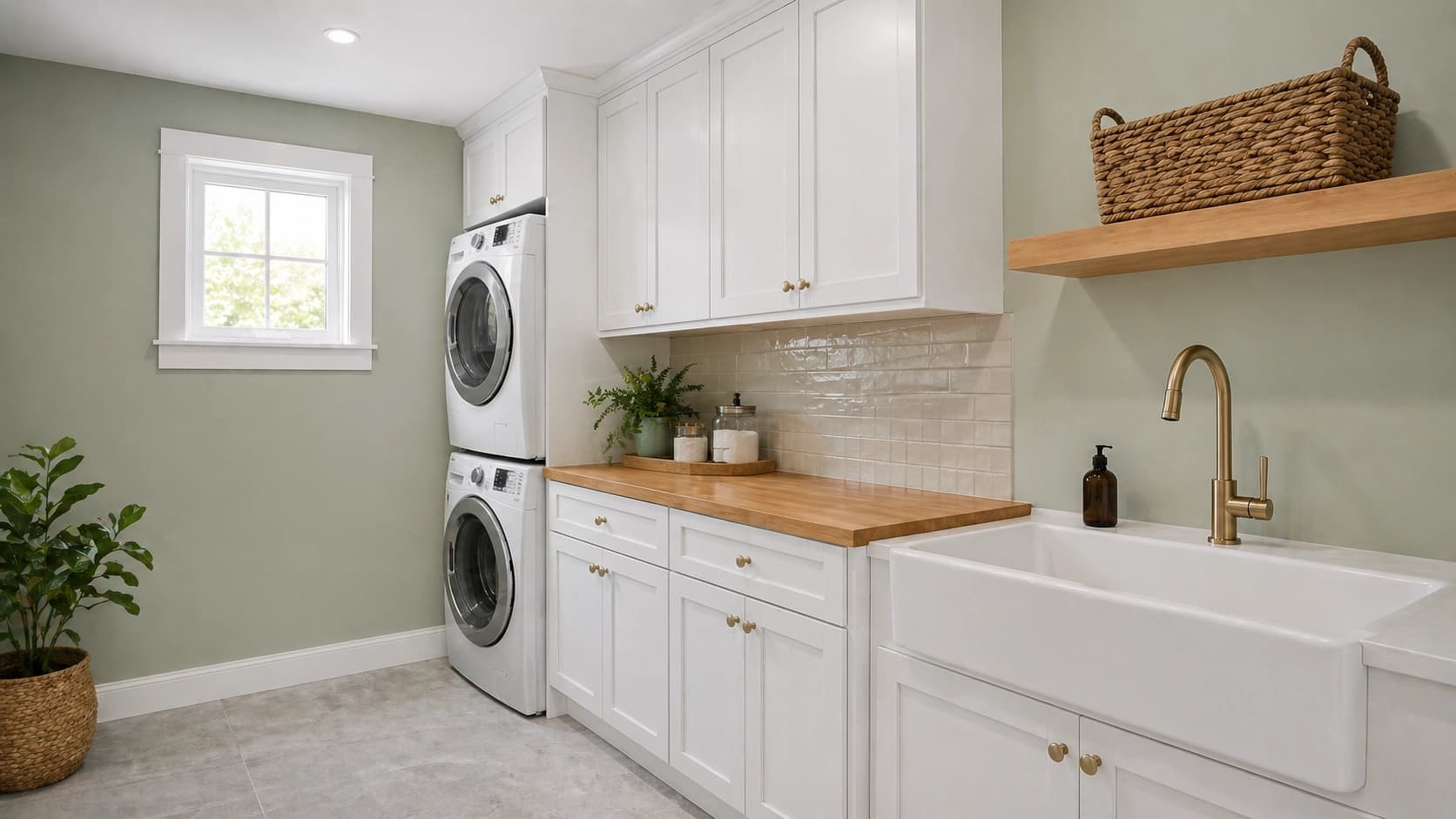
Green has surged in bathroom design for 2026, especially soft sage tones that create an organic, nature-inspired feel. They pair exceptionally well with wood vanities, stone countertops, and brass hardware — bringing the outside in without overwhelming a small space.
Saybrook Sage(Benjamin Moore) — a dusty, warm sage that reads as neutral in bathroom lighting. Sophisticated without trying too hard, and it complements both warm and cool-toned tile.
Softened Green(Sherwin-Williams) — barely-there green that adds a whisper of color. Perfect if you want to move beyond white without committing to bold color. Explore the green family for more.
Warm Earth Tones & Terracotta
One of the biggest bathroom color shifts in 2026 is the move toward warm, earthy shades. Terracotta, clay, and warm browns create bathrooms that feel grounded and cozy — a welcome departure from the cool gray trend that dominated the last decade.
Cinnamon Slate(Benjamin Moore) — Benjamin Moore's 2025 Color of the Year is a muted warm brown that creates incredible depth in a bathroom. Pair with cream tile and matte black fixtures for a modern earthy look. Read our Color of the Year comparison for more on this shade.
Latte(Sherwin-Williams) — a warm, creamy beige-brown that adds warmth without going dark. Ideal for bathrooms that lack natural light, where cooler tones can feel flat and lifeless.
Soft Grays
Gray remains one of the most popular bathroom colors because it offers more visual interest than white while staying neutral enough to work with any fixture or tile. The trick is choosing a gray with the right undertone for your lighting — cool grays with blue undertones suit modern bathrooms, while warm grays with greige undertones soften traditional spaces.
Repose Gray(Sherwin-Williams) — a true neutral gray with barely-there warm undertones. One of the most reliable bathroom grays because it doesn't shift purple or blue under artificial light. Explore more in the gray color family.
Moody & Dramatic (Powder Rooms)
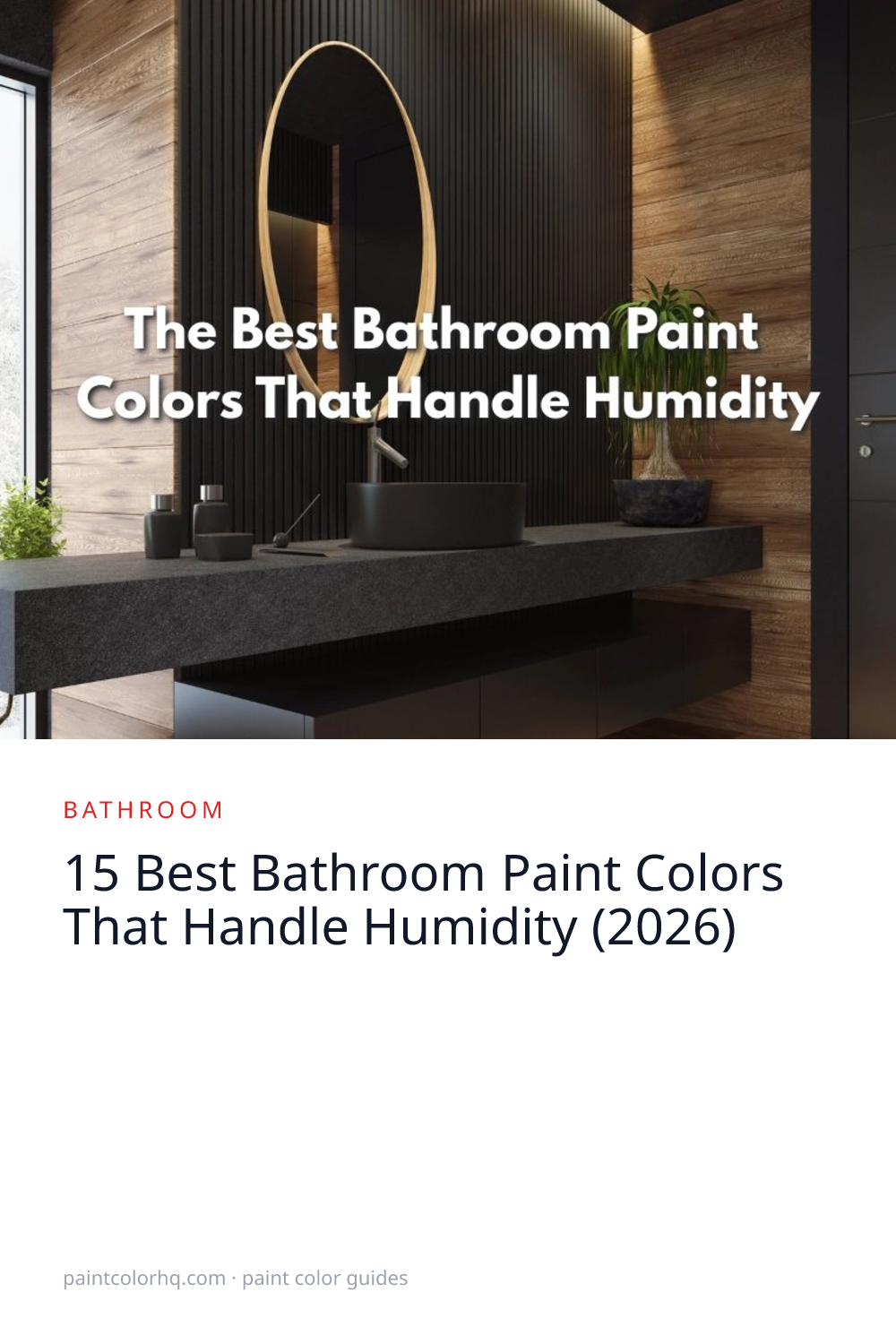
Powder rooms and half baths are the perfect canvas for dark, dramatic colors. Since these rooms are small and often windowless, lean into the moodiness rather than fighting it. Jewel tones — deep emerald, sapphire, and plum — make a small powder room feel like a jewel box.
Naval(Sherwin-Williams) — a rich, saturated navy that transforms a powder room into something guests remember. Pair with a gold-framed mirror and brass sconces for maximum impact.
Essex Green(Benjamin Moore) — a deep forest green for a bathroom that feels lush and enveloping. See how it compares to similar shades with our color compare tool.
Best Colors for Small Bathrooms
Small bathrooms need colors that open up the space rather than shrink it. Light, cool-toned colors reflect more light and create the illusion of depth. Avoid dark colors on all four walls in small, low-ceilinged bathrooms — save those for an accent wall or a powder room with high ceilings.
The best picks for tight spaces: Quiet Moments(Benjamin Moore), Pure White(Sherwin-Williams), and Repose Gray(Sherwin-Williams). All three keep the room feeling airy without being stark. Use our color search to find similar light-toned options across all brands.
Windowless Bathroom Color Strategy
Bathrooms without natural light rely entirely on artificial lighting, which changes how every color looks. Cool LED vanity lights push warm colors toward muddy territory, while warm incandescent bulbs make cool blues look grayish-green.
For windowless bathrooms, stick with colors that have balanced undertones — not too warm, not too cool. Aegean Teal, Repose Gray, and White Dove all perform well under mixed artificial lighting. Read our undertones guide to understand why this matters.
How to Choose the Right Bathroom Paint
Match your finish to moisture level. Use semi-gloss on ceilings above tubs and in shower surrounds. Satin works for general bathroom walls. Never use flat or matte in any bathroom — it absorbs moisture and traps mildew.
Run the exhaust fan for 20+ minutes. Proper ventilation is the single best thing you can do to preserve your paint job. Run the fan during and for at least 20 minutes after every shower or bath.
Sample in your actual bathroom lighting. Paint at least a 12x12 inch swatch on the wall and observe it in morning, afternoon, and evening lighting before committing. Colors shift dramatically between natural and artificial light. Read our paint sampling guide for the full process.
Consider your fixture finishes. Chrome and polished nickel lean cool — pair them with blues, cool grays, and crisp whites. Brass, gold, and matte black lean warm — pair them with greens, warm whites, and earth tones. Use our palette generator to build a complete bathroom color scheme.
Use our paint calculator to estimate exactly how much paint you need — bathrooms are small rooms where buying the right quantity saves money and avoids batch-matching headaches.
Frequently Asked Questions
What is the best paint finish for bathrooms?
Satin or semi-gloss. Both resist moisture, clean easily, and inhibit mildew growth. Semi-gloss is best for high-moisture zones like ceilings above showers. Avoid flat and eggshell finishes in any bathroom.
Can you use dark colors in a small bathroom?
Yes — with caveats. Dark colors work best in powder rooms and half baths where you want drama over spaciousness. In a small full bath, limit dark color to one accent wall and keep the remaining walls light. Good lighting is essential.
How do I prevent bathroom paint from peeling?
Three things: use mildew-resistant paint in satin or semi-gloss, run your exhaust fan for 20 minutes after every shower, and apply a quality primer before painting — especially over previously damaged or mildew-stained surfaces.
What bathroom paint colors increase home value?
Light, neutral tones consistently test well with homebuyers. Soft blues, warm whites, and light grays photograph well in listings and appeal to the widest audience. Avoid highly personal or trendy colors if you plan to sell within a few years.
Should bathroom walls and ceiling be the same color?
In small bathrooms, painting the ceiling the same color as the walls creates a cocoon effect that can actually make the room feel larger. In larger bathrooms with higher ceilings, a lighter ceiling color keeps the space feeling open. Either way, use semi-gloss on the ceiling for maximum moisture resistance.