
How to Test Paint Samples the Right Way
A 1-inch paint chip cannot tell you what a color will look like on your walls. Colors shift dramatically based on the size of the surface, your room's lighting, adjacent colors, and the time of day. Here's the right way to sample paint so you avoid expensive regrets.
Why Paint Chips Lie
When you look at a tiny paint chip, your brain interprets the color differently than when that same color covers an entire wall. Small samples appear darker and more saturated than they will on a large surface. A medium gray on a chip can look like a light gray on a wall. A subtle blue undertone that's invisible on a chip becomes unmistakable at room scale.
This is why the #1 paint complaint is “it looked different on the chip.” It always will.
Option 1: Peel-and-Stick Samples
Both Sherwin-Williams and Benjamin Moore offer large peel-and-stick color samples (approximately 8×8 inches). At $5–8 each, they're the cheapest way to test multiple colors. Move them around the room, hold them next to your trim and countertops, and observe them at different times of day.
Tip: Don't press them flat against the wall. Hold the sample about an inch away so you see the color without being influenced by the current wall color underneath.
Option 2: Paint Sample Boards
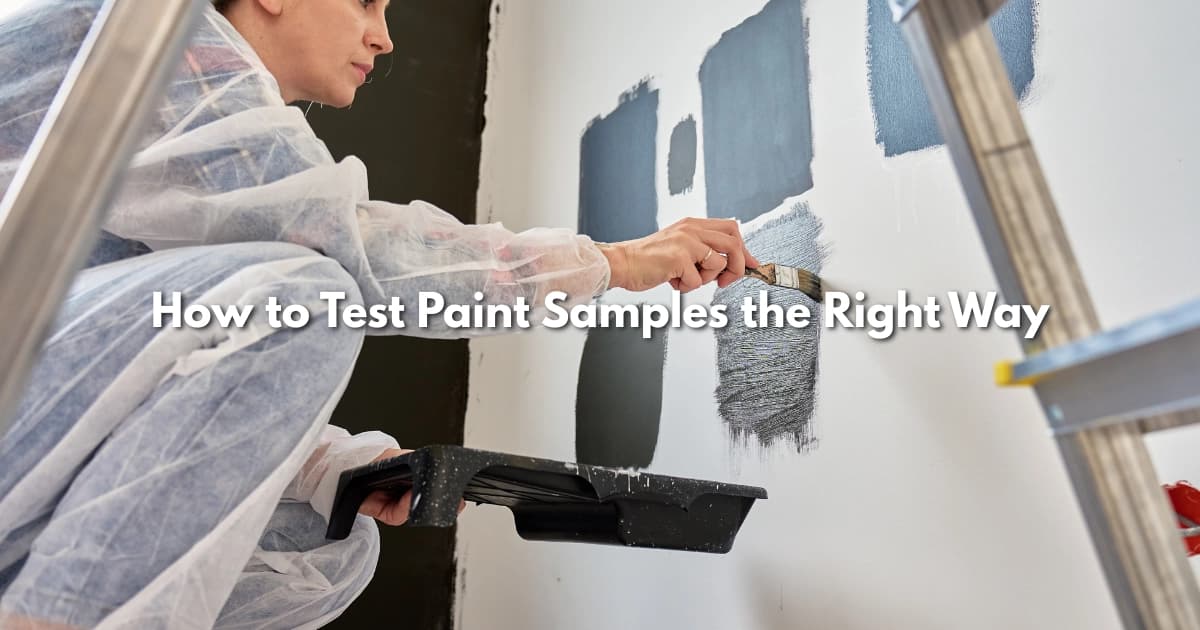
Buy a quart sample ($8–15) and paint a large piece of white poster board — at least 2 feet square. Apply two coats and let it dry fully. This gives you a portable sample you can move to different walls and compare against other colors.
Why poster board and not the wall? Painting directly on the wall means the existing color bleeds through and distorts your sample. A white board gives you the true color.
Option 3: Paint Directly on the Wall
If you prefer painting directly on the wall, follow these rules: Paint at least a 2×2 foot square. Apply two full coats. Paint samples on at least two different walls — one that gets direct light and one that doesn't. Don't sample in a corner (corners are always darker). And paint over a white-primed area if possible.
The 24-Hour Rule
Never judge a paint sample immediately. Wet paint looks different from dry paint (usually darker when wet). And colors shift dramatically with different light throughout the day:
Morning light is warm and golden (east-facing rooms). Midday light is the most neutral. Afternoon light is warm and orange (west-facing rooms). Evening (artificial light) is where most bad color decisions reveal themselves — cool LED bulbs amplify blue undertones, warm incandescent bulbs amplify yellow.
Live with your sample for a full day-night cycle before deciding. Read our undertones guide for more on how lighting transforms color.
How Many Colors to Sample
Three is the sweet spot. Fewer than three and you might miss a better option. More than five and you'll create decision paralysis — all the colors will start looking the same. Pick your top three using our color search, then sample all three.
Digital Preview First
Before spending money on physical samples, narrow your options digitally. Our room visualizer lets you preview colors on room photos, and the color identifier can extract paint colors from any photo you love. These tools won't replace physical samples, but they'll help you go from 50 options to 3.
Use our paint calculator to figure out how much paint you'll need once you've made your final choice. And if you're still narrowing down your options, our warm vs cool paint colors guide will help you understand how temperature affects your final decision.