
15 Best Nursery Paint Colors for 2026 (Gender-Neutral Picks That Last)
Explore colors in this guide
Open a color for its details and cross-brand alternatives. Read on for the context behind each choice.
The best nursery paint color for most rooms is Benjamin Moore Saybrook Sage (HC-114, hex #b2b8a3, LRV 46) — a warm, gender-neutral sage green that is calming for newborns and still looks stylish at age ten. For parents who prefer a neutral, Benjamin Moore White Dove (OC-17, hex #F3EFE0, LRV 86) is the safest warm white for nurseries. The 2026 nursery trend has shifted away from pastel pink and baby blue toward earthy, muted tones — mushroom taupes, smoky sages, and warm clays that grow with your child. These 15 nursery paint colors from Benjamin Moore, Sherwin-Williams, and Behr are ranked by versatility, longevity, and sleep-science research.
Why Baby Pastels Are Out in 2026
Pastel pink and baby blue have their place, but they're the nursery paint colors most parents regret within two years. They feel dated quickly and don't transition well as kids develop their own preferences.
The 2026 trend in baby room colors leans into mushroom taupes, smoky sages, warm clay tones, and creamy whites. These are sophisticated, muted shades that happen to be kid-friendly — colors that would look equally at home in a guest room. The goal: paint once, enjoy for a decade.
Best Soft Green Nursery Colors
Green is the most versatile nursery color and the top choice among nursery designers in 2026. It's gender-neutral, calming, and connects the room to nature — exactly what sleep experts recommend for a baby's environment.
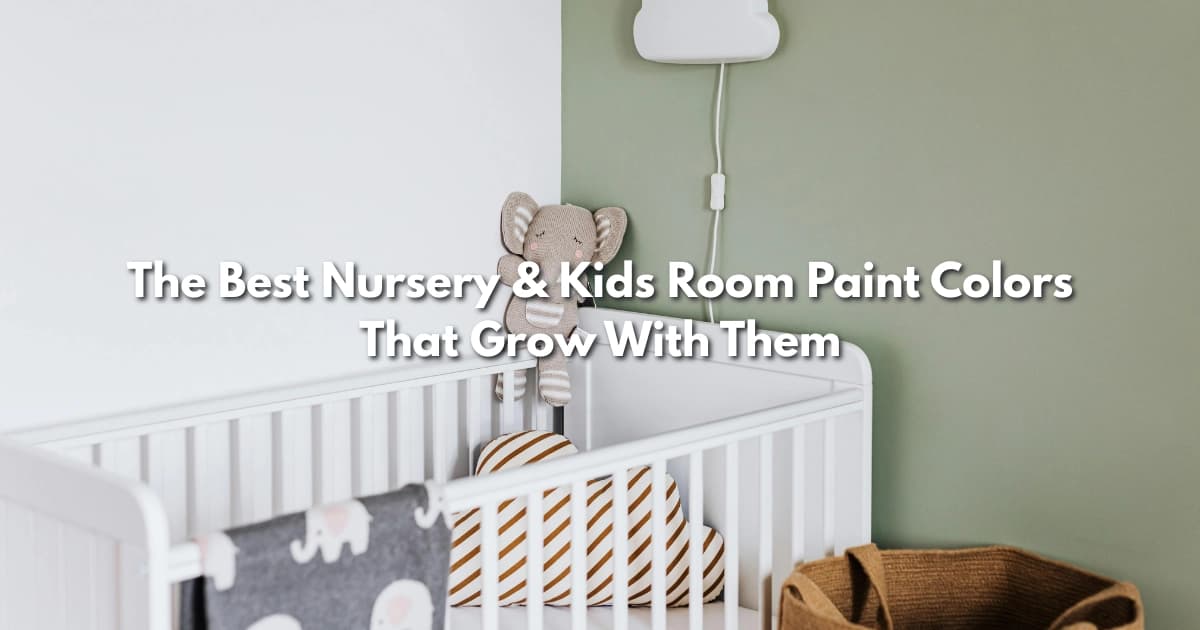
Saybrook Sage(Benjamin Moore) (LRV 46.4) — a warm, dusty sage that is serene for an infant and sophisticated enough for a 10-year-old. It pairs beautifully with natural wood cribs and white furniture. Its closest Sherwin-Williams match is Softened Green (SW 6177) with a CIEDE2000 Delta E of approximately 2.3.
Softened Green(Sherwin-Williams) (LRV 49.3) — barely there. This whisper of green reads almost neutral, making it the safest green choice for any nursery. It works in every lighting condition — north-facing, south-facing, and under warm 2700K nightlights.
Restful(Sherwin-Williams) (LRV 39.1) — a richer sage suited for a nursery accent wall. At LRV 39, it is on the darker side for all four walls in a small nursery but adds genuine personality on a single feature wall. Browse the green color family for more options.
Best Calming Blue Nursery Colors
Blue promotes calm and better sleep — a 2013 Travelodge study of 2,000 homes found that people sleeping in blue rooms averaged 7 hours 52 minutes of sleep, the longest of any color. Blue lowers heart rate and reduces anxiety, making it ideal for a nursery where infants sleep 14–17 hours per day. Choose dusty, muted blues with LRV values between 40 and 60 rather than bright or primary blues.
Quiet Moments(Benjamin Moore) (LRV 61.6) — a blue-green-gray that shifts from calming blue at naptime to cheerful green-gray in morning light. Its closest Behr equivalent is Light French Gray (720E-2) with a Delta E of approximately 3.1. Read our undertones guide for details on how light affects this color.
Sleepy Blue(Sherwin-Williams) (LRV 57.9) — a gentle powder blue with gray undertones that never feels babyish. At LRV 58, it reflects enough light to keep small nurseries feeling open while providing real color presence.
Silver Mist(Benjamin Moore) (LRV 63.9) — a silvery blue that transitions from nursery to tween room without repainting. See more in the blue family.
Best Warm Neutral Nursery Colors
Warm whites, creams, and mushroom taupes create a bright, airy nursery that serves as a blank canvas for colorful bedding, art, and toys. They're the easiest baby room colors to accessorize and redecorate around as your child grows. In 2026, the trend is moving toward warmer, earthier neutrals rather than the cool grays that dominated nurseries a few years ago.
White Dove(Benjamin Moore) (LRV 86.2) — the most popular warm white in America. In a nursery, it creates a bright, peaceful space that lets colorful decor pop. Its Sherwin-Williams equivalent is Pure White (SW 7005, LRV 84) with a Delta E under 2.5. See our white paint guide for the full breakdown.
Shoji White(Sherwin-Williams) (LRV 74.3) — a creamy, sandy white that counteracts the cool blue cast in north-facing nurseries. At LRV 74, it reflects enough light to keep the room bright while adding perceptible warmth. See our north-facing rooms guide for more.
Balboa Mist(Benjamin Moore) (LRV 68.1) — a warm gray-beige for parents who want depth beyond white. At LRV 68, it is cozy without being dark. Explore the white and beige families for similar tones.
Earthy Tones: The 2026 Nursery Trend
The biggest shift in nursery paint colors for 2026 is toward earthy, grounding tones — mushroom taupes, warm clays, and dusted olives. These colors create a cocoon-like atmosphere that feels safe, warm, and timeless. Color-drenching (painting walls, trim, and ceiling the same shade) is one of the most popular nursery techniques for 2026.
Shiitake(Sherwin-Williams) (LRV 51.2) — the defining mushroom taupe of 2026. It sits between beige, gray, and the faintest whisper of brown. At LRV 51, it is warm and grounding without darkening a small nursery.
Universal Khaki(Sherwin-Williams) (LRV 41) — the 2026 HGTV Home by Sherwin-Williams Color Collection pick. A warm, sandy neutral with a Delta E under 3.0 to Benjamin Moore Shaker Beige (HC-45). See our 2026 paint color trends roundup.
Browse the brown and beige families for more earthy nursery options.
Soft Pink & Lavender (Done Right)
Pink and lavender can work beautifully in nurseries — the key is choosing muted, sophisticated versions rather than bubblegum or cotton candy. The best pink nursery colors have enough gray or beige in them that they read as neutral-adjacent.
Silver Peony(Benjamin Moore) (LRV 53.3) — a barely-there mauve-gray that reads as sophisticated pink in warm light and neutral gray in cool light. It transitions from nursery to teen room without repainting.
Pale Oak(Benjamin Moore) (LRV 70.8) — a warm blush-beige with a pink-beige undertone that is the softest hint of pink without being identifiably pink. It is one of Benjamin Moore's top 5 nursery colors. See the pink family for more.
How to Choose the Right Nursery Color for Your Room
Consider lighting first. A nursery that gets morning sun will warm up cool blues and greens. A north-facing nursery will cool down warm tones. Test any color you're considering on the actual wall, in both daylight and with the nursery light on, before committing. Read our warm vs. cool guide if you're unsure which direction to go.
Small rooms benefit from lighter tones. If the nursery is under 120 sq ft, stick with lighter shades that reflect light and make the room feel larger. Save deeper colors like Restful or Shiitake for an accent wall.
Use our tools to plan. Preview any of these colors on your walls with the room visualizer, build a full wall + trim + accent palette with the palette generator, or compare two colors side by side if you're torn between options.
Nursery Paint Safety: VOC Guide for New Parents
Use zero-VOC or low-VOC paint. Babies spend 12-16 hours a day in the nursery, and their developing lungs are more sensitive to airborne chemicals. VOCs (volatile organic compounds) are the chemicals that cause “new paint smell.” All major brands now offer zero-VOC lines: Benjamin Moore Natura, Sherwin-Williams Harmony, and Behr Premium Plus are the most popular.
Paint early. Finish painting at least 2-3 weeks before baby arrives. Even low-VOC paint needs time to fully off-gas and cure. Open windows during and after painting to accelerate ventilation.
Use eggshell or satin finish. Kids rooms need washable walls. Flat paint shows every fingerprint and scuff mark. Eggshell is easy to clean while still looking soft. Use our paint calculator to figure out how many gallons you'll need.
Nursery Painting Tips from Designers
Try an accent wall. Paint one wall in a deeper tone and keep the rest neutral. This lets you easily update the room's personality by repainting just one wall as your child grows. Use our room visualizer to preview the look before you commit.
Color-drench for a cocoon effect. The opposite of an accent wall — paint walls, trim, ceiling, and even the door in the same shade. This technique works especially well with warm neutrals like Balboa Mist or Shiitake, creating an enveloping, womb-like calm.
Match across brands. Found a color you love at one brand but prefer another brand's paint formula? Paint Color HQ uses the CIEDE2000 color-difference formula to calculate precise perceptual matches across all 13 brands in our 26,000+ color database. Use our color search to find the closest match — low scores indicate close digital matches, not guaranteed physical substitutes. Or use our color identifier to upload a photo of a nursery you love and find similar digital paint colors; a photo cannot identify a paint formula.
For more room-by-room color advice, see our guides to the best calming bedroom colors and best living room colors.
Nursery Paint Colors FAQ
What is the best color for a nursery? Soft sage greens (like Saybrook Sage) and warm neutrals (like White Dove) are the most universally loved nursery colors. They're gender-neutral, calming, and transition well as your child grows.
What nursery colors help babies sleep? Cool blues and soft greens are backed by research as sleep-promoting colors. They lower heart rate and reduce anxiety. Avoid bright reds, oranges, or saturated yellows, which are stimulating.
Is it safe to paint while pregnant? Zero-VOC paints (Benjamin Moore Natura, Sherwin-Williams Harmony, Behr Premium Plus) emit less than 5 grams per liter of volatile organic compounds. The American Pregnancy Association advises pregnant women to avoid painting directly but notes that brief exposure to zero-VOC paint after the first trimester poses minimal risk. Have someone else paint and ventilate the room for 48–72 hours before use.
What are the trending nursery colors for 2026? Earthy mushroom taupes, smoky sages, warm clay blushes, and creamy whites dominate 2026 nursery trends. The shift is toward warmer, more atmospheric colors rather than the cool grays that were popular in previous years.
How many coats of paint does a nursery need? Plan for two coats of your chosen color over a quality primer. If you're painting over a dark color, you may need a third coat or a tinted primer. Use our paint calculator to estimate the total gallons for your room size.